
Services
Geneva 2000™ Specialty Dentures
Confirming Provider Training Before You Book
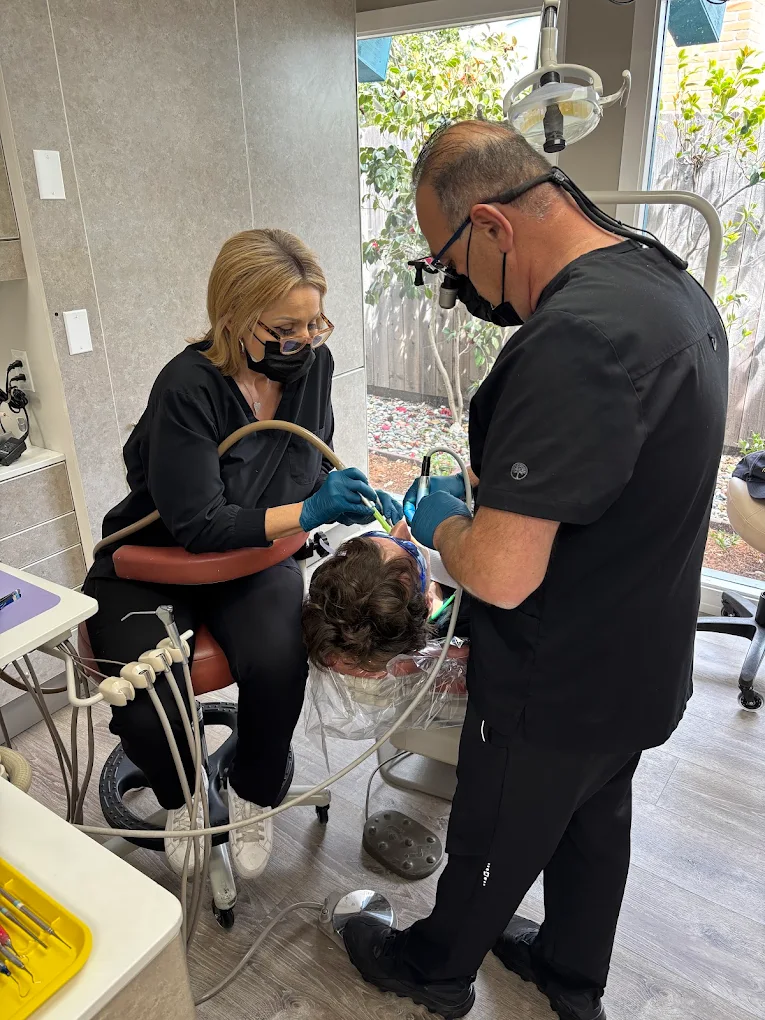
Geneva 2000™ is a named denture system, so ask whether the dentist trained in it before you book. Dr. Ghassan Aro is a member of the Geneva Institute for Removable Restorations and has advanced training in dentures and dental implants. Ask any provider the questions below so you know who is building your smile.
Here’s something a lot of people don’t know. Any office can say it makes “custom dentures.” That phrase doesn’t tell you much. Geneva 2000™ is different because it’s a specific system with its own training. When you’re comparing offices, you’re not only asking “Do you make dentures?” You’re asking, “Did the person making mine learn this method?”
That matters because dentures live in your mouth every day. They affect how you chew, how you talk, and how your face looks when you smile. A small miss in fit or bite can mean sore spots, clicking, or a denture that slips when you laugh. Training in a set method gives the dentist a clear plan to follow from the first visit to the final fit.
Consider:
- Did the dentist train through the Geneva Institute, or is “Geneva” just a word on the menu?
- Who takes your impressions and bite records, and who checks them?
- Will you get to see and try your teeth before the final denture is made?
- How are adjustments handled after you start wearing them?
- If you have missing bone or want more stability, can the office talk with you about implant-supported options?
- How many visits should you plan for, and what happens at each one?
A good office won’t get fussy about these questions. It’ll be glad you asked. If the answers feel vague or rushed, that’s worth noticing. You deserve to understand the plan before you pay for it or give up a tooth.
Signs a Specialty Denture System Fits Your Situation
A specialty denture system like Geneva 2000™ tends to make the most sense when fit, comfort, and a natural look really matter to you, and when a basic denture hasn’t given you that. Not everyone needs it. But if a few of the signs below sound familiar, it’s worth a closer talk.
Your current denture slips when you talk, laugh, or eat, and you lean on paste to keep it in place.
You get sore spots that keep coming back, even after adjustments.
You hear clicking, or your words sound off, like a lisp or a whistle on some sounds.
You've cut foods you love, like apples, corn on the cob, or a good steak, because chewing feels hard.
Your face looks sunken around the mouth or chin, and you feel it makes you look older than you are.
Your teeth look fake to you. Too white, too even, or just not like you.
You're about to get your first denture and want to get it right the first time.
Picture someone at dinner with friends who quietly orders soup again because the steak looks like too much work. Or someone who stops smiling in photos because the teeth look like a row of piano keys. Those are the moments that tell you a denture isn’t doing its job. A denture should let you forget it’s there.
Your looks count here, too. Your smile carries your personality. The shape, shade, and size of your teeth, and how they sit with your lips and cheeks, can change how you feel meeting people. If you want a denture that looks like it belongs to you, not a stock set, that’s a strong sign a more custom approach is worth it.
Some people also need more hold than any denture can give on its own. If you’ve lost a lot of jawbone over the years, even a well-made denture may still move. In that case, an implant-supported denture could be a better path. We can talk through that with you, and if bone grafting would help first, we’ll explain why.
When you may not need it:
A specialty system isn’t always the answer. If you still have several healthy teeth, a partial denture, a bridge, or a crown may serve you better and save more of your natural smile. If your current denture fit well until it cracked or a tooth broke off, a repair might be all you need. And if a denture feels loose only because it’s many years old, a reline could help for a while. We’d rather tell you that straight than sell you something you don’t need.
If you’re not sure where you fall, that’s okay. Bring your current denture, your list of what bugs you about it, and what you wish it did better. That gives us a real starting point, and it helps you see your options side by side before you decide anything.
When a Removable Denture Is Not the Right Answer
A removable denture is made to replace teeth that are already gone or can’t be saved. It’s a good tool, but it’s not the right tool for everyone. If your own teeth can still be kept healthy, or if you need teeth that stay put all day and night, a denture may not be your best choice. Here are the times we’d point you another way, even though it means we won’t be making you a denture.
Your teeth feel loose from gum disease, but they're still there.
Loose teeth don’t always have to come out. A deep cleaning, called scaling and root planing, plus regular periodontal maintenance can sometimes calm gum disease so your teeth can stay. Your own teeth also help hold on to the jawbone under them. Pulling teeth that could have been saved is a choice you can’t take back.
You're missing just one tooth.
A single dental implant can fill that gap without leaning on the teeth next to it. It stays in, and you brush it like a real tooth. For small gaps, the partial and bridge options we covered above are also worth a look.
You know you'll never feel at ease taking your teeth out.
Some people just don’t want teeth that come out at night or sit in a cup. If that’s you, implant-supported restorations or a full-mouth reconstruction can give you teeth that stay fixed in place. They take more planning, and often more time, but they may fit the way you want to live.
You have pain, swelling, or an infection right now.
A sore tooth, a swollen gum, or an abscess needs care first. A denture built over a problem like that won’t fit or feel right, and the problem won’t go away on its own under it.
Your jaw clicks, locks, or aches.
A denture’s bite depends on how your jaw opens and closes. If your jaw joint is giving you trouble, a TMJ/TMD evaluation should come first, so any new teeth are built around a jaw that’s working well.
Taking care of a removable appliance would be hard for you.
Dentures come out to be cleaned, and they need to go back in the right way. A strong gag reflex, stiff or sore hands, or memory trouble can make that tough every day. In those cases, a fixed option may be easier to live with.
Picture someone whose front teeth have started to shift and wiggle. They figure dentures are next, so they come in ready to have everything pulled. After a closer look, the better first step might be treating the gums and seeing how the teeth hold up. That person may keep their own smile for years longer. That’s the kind of answer we’d want to give you, even if it isn’t the one you walked in expecting.
Waiting can be the right call, too. If your current denture fits, lets you eat what you like, and looks like you, there’s no reason to replace it just because a newer system exists. A denture that’s doing its job is a denture worth keeping. You can always come back when something changes, like new sore spots, more slipping, or a smile that no longer feels like yours.
Not sure what your Geneva 2000™ Specialty Dentures project needs? Ask us.
Call now for a free estimate. Aro Dental Practice is ready to help.
What Happens During the Fitting Process
Getting a custom denture isn’t one appointment. It’s a short series of steps, and each one lets your dentist check the fit, the bite, and the look before anything becomes final. Every plan is a little different, so we’ll walk you through the exact steps for yours at your consultation. Here’s what the path to a well-made custom denture generally looks like, so nothing catches you off guard.
1. A full look at your mouth
Your gums, any teeth you still have, your jawbone, and your bite all get checked first. Our office uses 3D imaging for treatment planning, which helps us see the bone and tissue under your gums before we talk through choices with you.
2. Care that has to come first
If a tooth needs to come out or your gums need treatment, that’s handled before the final denture is made. If you feel nervous about that part, ask about nitrous oxide or oral sedation.
3. Detailed impressions
These are molds of your gums and the soft edges of your mouth. A denture can only fit as well as the impression it’s built from, so this step takes care.
4. Bite and face records
Your dentist measures how your jaws meet, how much your lips need support, and how tall your face should look when your teeth are together. This is what helps a denture look like you and not a stock set.
5. Choosing your teeth
You’ll talk about shape, shade, and size. Want them a bit less perfect so they look real? This is the time to say so.
6. The try-in
You’ll see a practice version of your teeth set in wax. You can smile, talk, and look in the mirror. Changes are easy at this stage and hard later, so speak up about anything that bugs you.
7. Delivery day
Your final denture goes in, and the fit is checked for pressure spots and bite balance.
8. Follow-up adjustments
Small sore spots in the first weeks are common while your gums get used to the new teeth. Short visits to smooth those spots are a normal part of getting the fit right.
The try-in is the step people remember most. Picture someone looking in the mirror at their wax teeth and thinking, “That’s close, but my smile used to show a little less.” That’s exactly the kind of note that shapes the final denture. You don’t have to know dental words. Just tell us what you see and how it feels.
Give yourself some patience after delivery day, too. New dentures can feel big at first. Your tongue, cheeks, and lips need time to learn them. Reading out loud helps your speech settle. Starting with soft foods cut into small bites helps you learn to chew with them. If you’ve just had teeth removed, your gums will keep changing shape as they heal, so the fit may need a tune-up down the road.
The whole point of all these steps is simple. Each check is a chance to catch a small miss before it turns into a sore spot, a slipping denture, or a smile that doesn’t feel like yours. We’ll explain what’s happening at every stage and why, so you’re never guessing.
Adjusting to a New Denture After Delivery
The first few weeks with a new denture are a learning stretch, and that’s normal. Most of getting used to it comes down to patience, telling us what you notice, and not trying to tough out pain. A denture that’s built with care still needs your mouth to meet it halfway.
Some things can feel strange at first but usually settle down as your mouth gets used to the new teeth. You may notice more spit than usual for a while. Food may taste a little different, or hot drinks may be harder to judge, since part of the roof of your mouth is covered. Your cheeks and tongue may feel crowded. None of this means something’s wrong. It means your mouth is learning something new.
When to Call:
Other things are worth a call instead of a wait. Don’t try to fix these at home or sand anything down yourself.
- A sore spot that gets worse instead of better, or one that makes you stop wearing the denture.
- A spot that bleeds or looks like an open sore.
- A bite that feels like it hits on one side first.
- A denture that rocks or drops when you’re not eating or talking.
- A crack, a chip, or a tooth that comes loose.
Picture someone who gets a small sore spot in week one and decides to just take the denture out for a few days. Then they come in, and the spot has healed, so there’s nothing left to see. It’s easier to find and smooth a pressure point when you’ve worn the denture that day and the spot still shows. If you can, wear it for a few hours before a follow-up visit.
It also helps to keep simple notes. Which foods were hard? Which words felt off? Where did it rub, and when? You don’t need dental words. A note like “lower left, after lunch” gives us a real clue, and it turns a follow-up visit into a quick fix instead of a guessing game.
We’ll give you care steps for your denture at delivery, including how to clean it and how to store it when it’s out. Follow those, and ask us to show you again if anything’s unclear. It’s a lot to take in on one day, and nobody expects you to remember all of it.
Getting used to a denture doesn’t end after the first month, either. Your gums and jawbone slowly change shape over the years, so a denture that fits well today may feel looser later. Regular check-ups let us catch that early, check your gums and mouth for any problems, and talk with you about a reline or other options before a small change becomes a daily bother. We’d like to be the team you come back to for years, not just the office that made your teeth.
Contact Us
Ready to Get Started?
Contact Dr. Ghassan Aro and our experienced team today to book your consultation or routine visit.
Address
1100 Grove St, San Luis Obispo, CA 93401
Hours
Mon – Fri: 8:00 AM – 4:00 PM Saturday – Sunday: Closed