
Services
Oral Surgeon
Signs You May Need an Oral Surgeon
Jaw pain that won’t let up, a tooth cracked below the gumline, or swelling that seems to come from nowhere—these usually mean it’s time for an oral surgeon, not just a cleaning. Waiting on symptoms like these almost always makes the eventual treatment bigger and harder than it needed to be. If something in your mouth has felt wrong for more than a few days, that’s your cue to get it checked.
So how do you tell the difference between a bad day and an actual problem? Here’s what we tell patients at our San Luis Obispo office nearly every week.
Wisdom teeth are the classic example. If yours are coming in sideways, or only halfway through the gum, you’ll usually feel pressure in the back of the jaw, sometimes with swelling that comes and goes. We also see a spike in sinus-related tooth pain every spring, when local allergy season kicks in and pressure in the upper sinuses starts mimicking a toothache in the back molars. A filling won’t fix that.
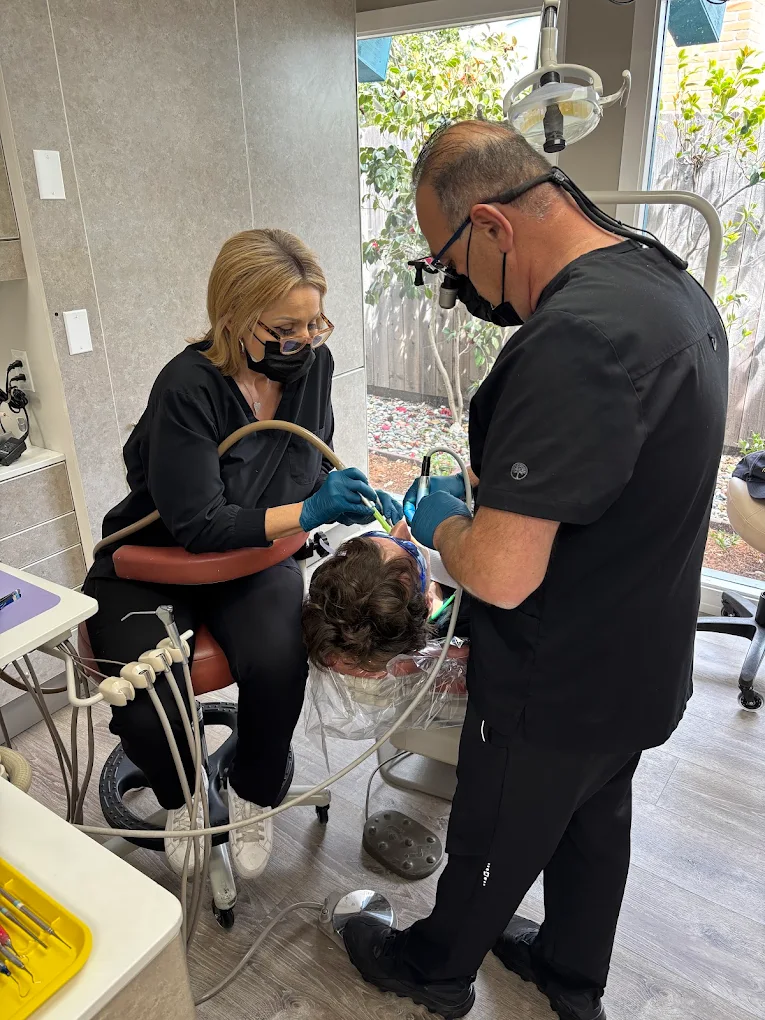
Signs You May Need Oral Surgery
Patients wait longer than they should. Not because they don't notice something's off; they just hope it'll settle down on its own. It rarely does.
- Jaw pain or clicking that’s stuck around for more than two weeks
- A tooth broken at the gum line with no visible crown left to save
- Swelling in the cheek or jaw that isn’t going down on its own
- Numbness or tingling in the lip or chin after an injury
- A tooth that’s loose after trauma, even if it doesn’t hurt
When a General Dentist Can Still Treat the Problem
Not every problem tooth needs a surgeon. That’s just the truth.
A lot of extractions fall into what we call simple extractions: single root, fully erupted, no nerve sitting right underneath. Dr. Aro has handled cases like this for over 20 years, and general dentists take care of this kind of work every week. We use 3D imaging before touching anything, so we can see the root shape and how close it sits to the nerve canal before deciding who should do the work.
So when does treatment stay in-house? Usually it comes down to a few things.
01
Clear, Simple Root
A visible tooth, baby or adult, that's loose or damaged but has a clear, simple root
02
Fully Above the Gumline
A tooth that's fully above the gumline with no bone impaction
03
No Spreading Infection
No sign of infection spreading into the jaw or sinus area
04
Low Surgical Risk
The patient has no complicating health conditions that raise surgical risk
Here’s the thing. If the imaging shows a wisdom tooth angled into the bone or a root wrapped around the nerve canal, that changes everything. We won’t guess about that. We’ll tell you straight whether it’s something we handle here or something that needs a referral out.
Some patients come in expecting the worst and leave relieved it was a five-minute extraction. Others walk in thinking it’s minor, and it isn’t. Either way, you deserve the honest answer, not the convenient one.
What to Expect at an Oral Surgery Consultation in San Luis Obispo
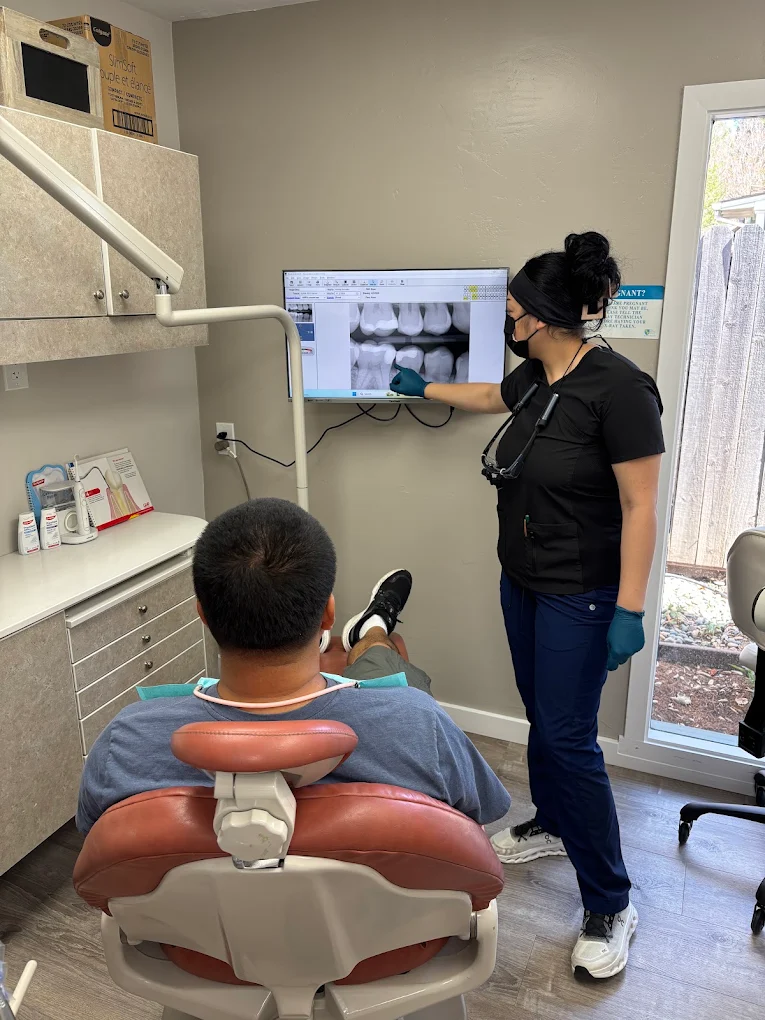
So what actually happens at your first visit? Nothing gets decided on the spot. Dr. Aro starts with 3D imaging; that’s how he sees the exact position of a tooth root or the shape of your jawbone before any options come up. You get a real look at your own mouth, not a guess.
01
Health History
You'll fill out a short health history; medications matter here more than people think.
02
Imaging Review
Dr. Aro reviews your imaging with you on screen, pointing out exactly what he's seeing.
03
Clear Diagnosis
He walks through the diagnosis in plain language, without rushing.
04
Treatment Options
You go over treatment options together, including what happens if you wait.
05
Written Treatment Plan
You leave with a written plan and time to think it over.
We had a patient last year who thought she just needed a filling. Turned out an old restoration had cracked near the root. The 3D scan caught it in about ten minutes, something a regular x-ray might have missed.
This is where the practice’s approach really shows. Dr. Aro treats treatment planning as part science, part art, and he wants you comfortable with the decision, not just talked into it. Ask about sedation, recovery time, and what a normal week looks like afterward. Nobody’s rushed into anything on day one.
Bring your ID, insurance card if you have one, and a list of any medications you’re on. That last part matters more than most people expect. Some blood thinners and bone medications change how we plan a procedure entirely.
Need help with an oral surgeon?
Call now for a free estimate. Aro Dental Practice is ready to help.
Sedation and Anesthesia Options for Nervous Patients
Scared of the chair? You’re not alone. We hear it nearly every week: someone sits down and admits they’ve put off oral surgery for years out of fear alone.
Here’s the truth. Anxiety about pain or being awake during a procedure is completely normal, and it’s something we plan around, not something we brush off. Numbing the area is standard for most procedures, and for patients who need more, there are additional sedation approaches used across oral surgery today, ranging from mild relaxation options to deeper sedation for more involved cases.
The right level depends on a few things.
- How complex the procedure is
- Your medical history and any medications you take
- How anxious you feel walking in
- How long the procedure will take
Dr. Aro takes time to walk through the pros and cons of each option before deciding anything; that’s simply part of how treatment planning works here. He’s spent over twenty years in San Luis Obispo having this exact conversation with patients who felt the same way you might right now.
So what does that conversation actually look like? We ask about your fears directly. We ask what’s happened at other dental visits, good or bad. And we use that, along with 3D imaging of the area, to build a plan that fits your comfort level, not just the procedure itself.
You don’t need to have all the answers before you call.
Bring your concerns. We’ll sort out the rest together, in plain language, before you ever sit in the chair.
Recovery After Surgical Extraction or Implant Placement
Here’s the part nobody tells you enough: recovery starts before you even leave the chair. We walk you through exactly what to expect, so you’re not googling symptoms at midnight wondering if something’s wrong.
The first 24 hours matter most. Bite down gently on gauze to control bleeding. Swelling usually peaks around day two or three; that’s normal, not a setback. Ice packs help early on, then switch to warm compresses after 48 hours. Stick to soft foods like yogurt, mashed potatoes, or soup. Skip straws entirely; the suction can dislodge a healing clot and set you back days.
We see this every single week; someone calls worried about swelling that’s actually right on schedule.
- Mild soreness and swelling for 2 to 4 days is expected
- Some oozing or pink saliva is normal; heavy bleeding is not
- Bruising on the cheek or jaw can show up a day or two later
- A follow-up visit lets us check healing and remove sutures if needed
Implant recovery runs a bit longer since the bone needs time to fuse around the post. Most people are back to their normal routines within a week, but that fusion process keeps working quietly underneath for months.
So what’s a real red flag versus normal healing? Fever, throbbing pain that gets worse instead of better, or swelling that spreads after day four—those are the moments to call us, not wait it out.
Contact Us
Ready to Get Started?
Contact Dr. Ghassan Aro and our experienced team today to book your consultation or routine visit.
Address
1100 Grove St, San Luis Obispo, CA 93401
Hours
Mon – Fri: 8:00 AM – 4:00 PM Saturday – Sunday: Closed