
Back-to-School Prep on the Central Coast
August 2026 brings an energetic, familiar buzz to San Luis Obispo. Local students across SLO County are gearing up to head back to class, swap relaxed summer schedules for structured morning routines, and pack up backpacks for the new academic year. Amid the rush of buying school supplies, organizing extracurricular activities, and packing healthy lunches, establishing a solid morning and evening oral health routine is just as crucial for keeping your child healthy, confident, and present in the classroom. A sudden toothache or preventable cavity can derail concentration, lead to missed school days, and disrupt an otherwise smooth start to the semester.
The “Snapping” Floss Trap
Parents and kids alike often prioritize brushing, but when it comes to cleaning between teeth, many patients ask us: How do you floss your teeth effectively without hurting your gums?
A common mistake we see in our practice is snapping string floss forcefully straight down into the delicate gum tissue. This aggressive downward motion acts like a guillotine for the delicate papilla (the wedge of gum tissue between your teeth), causing unnecessary bleeding, irritation, and physical discomfort. Naturally, this leads kids—and adults!—to assume flossing is inherently painful and give up on the habit altogether.
The Solution Thesis
Building a healthy, resilient smile for the school year starts with proper technique and consistent home care. At Aro Dental, located at 1100 Grove St in San Luis Obispo, Dr. Ghassan Aro and our friendly, dedicated team focus on stress-free, preventive family care. We take the mystery out of daily hygiene, helping parents and children build simple, comfortable habits that keep cavities away all year long.
The Art & Science of Effective Flossing
The C-Shape Precision Technique
Learning how to floss your teeth correctly comes down to gentle contact and precise angles rather than raw force. Instead of sawing back and forth or snapping straight down into the gumline, follow these simple steps for a safer, more effective clean:
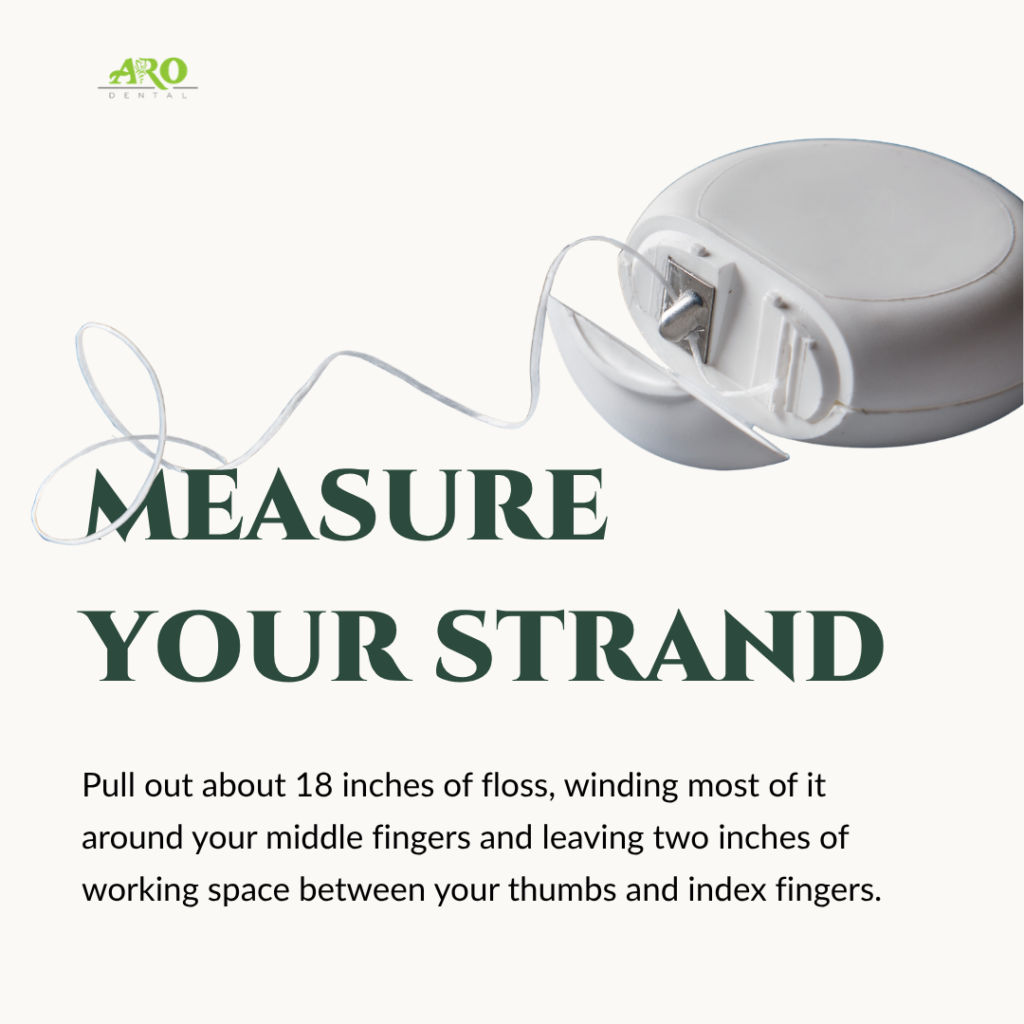
- Measure Your Strand: Pull out about 18 inches of floss, winding most of it around your middle fingers and leaving two inches of working space between your thumbs and index fingers.
- Guide with Ease: Gently slide the strand between two teeth using a subtle back-and-forth zigzag motion until it passes the tight contact point.
- Form the Curve: Curve the strand into a soft “C” shape around the side of one tooth.
- Slide and Hug: Hugging the tooth surface tightly, slide the floss gently beneath the gumline into the gingival sulcus.
- Wipe Up and Down: Move the floss in a smooth vertical motion up and down against the side of the tooth to lift away soft plaque and microscopic food debris.
- Double-Sided Cleaning: Repeat this exact motion on the adjacent tooth surface in the same gap before lifting the floss out and moving to the next set of teeth.
String Floss vs. Floss Picks for Busy SLO Families
When choosing the right interdental tool, remember that the best option is ultimately the one your family will use consistently every single day. Here is how the most popular options compare for busy households:
- Traditional String Floss: String floss remains the gold standard of oral hygiene. Because it is flexible, it easily conforms to the natural curves of each tooth, wrapping around rounded surfaces and cleaning deep beneath the gumline. It is ideal for teens, adults, and older children with strong fine motor skills.
- Pre-Threaded Floss Picks: Floss picks are an absolute game-changer for younger children who are still developing hand-eye coordination, as well as for busy parents managing tight morning schedules. While convenient, make sure to teach your kids to wipe off or rinse the pick head between teeth so they aren’t transferring trapped plaque from one gap to another.
- Water Flossers (Oral Irrigators): An excellent secondary tool or alternative for teens wearing traditional orthodontic braces, patients with bridge work, or individuals with exceptionally tight tooth contact points where string regularly shreds.
Why Brushing Only Cleans Part of the Picture
The 35% Blind Spot
A toothbrush is a fantastic tool for sweeping away plaque from the front, back, and biting surfaces of your teeth. However, bristles simply cannot bend around tight corners or penetrate the narrow spaces where adjacent teeth touch.
If you rely solely on brushing, you leave roughly 35% of your tooth surfaces uncleaned every single day. Over time, bacterial plaque and lingering food debris collect in these hidden spaces, creating ideal conditions for enamel demineralization, bad breath, and painful interproximal cavities (decay formed between two teeth).
Comprehensive Protection at Aro Dental
Visiting a trusted dentist in San Luis Obispo before the academic year takes off ensures small, hidden issues don’t escalate into sudden back-to-school dental emergencies. As your go-to San Luis Obispo dentist, Dr. Aro offers comprehensive solutions tailored to growing smiles:
- Targeted Pediatric Sealants: For growing smiles, we apply thin, clear or tooth-colored protective resin coatings (dental sealants) to the deep grooves and pits of permanent molars. Sealants form a physical barrier over vulnerable chewing surfaces, effectively locking out food particles and cavity-causing bacteria.
- Comprehensive Growth & Airway Evaluation: Oral health goes far beyond just teeth. During your child’s routine visit, Dr. Aro evaluates proper jaw development, bite alignment, and early signs of sleep-disordered breathing (such as chronic mouth breathing or narrow palates) that could impact sleep quality, mood, and focus in class.
- Peace of Mind for Emergencies: Accidents happen during after-school sports, physical education class, and playground recess. Knowing where to turn for an urgent pediatric dentist or a compassionate dentist in SLO gives your family a trusted clinical home base when unexpected toothaches, chips, or mouth injuries occur.
Home Hygiene vs. Clinical Checkups
To maintain optimal oral health, home care and professional dental care must work hand in hand. Here is how daily routines complement clinical treatments at our practice:
- Primary Target Area: Daily home hygiene focuses on soft surface plaque and loose food particles, while professional cleanings target hardened tartar (calculus) and hidden interproximal decay.
- Tool Precision: Home care utilizes manual or electric toothbrushes and C-shape string floss. Professional visits utilize ultrasonic scalers, specialized instrumentation, and high-resolution digital X-rays.
- Frequency Schedule: Home routines should occur twice daily (every morning and before bed), whereas professional cleanings and examinations are recommended every six months for optimal preventive protection.
- Cavity Prevention Reach: Daily flossing and brushing clean up to 100% of reachable outer surfaces. Professional care protects deep molar grooves, cleans beneath the gumline, and monitors developmental progress over time.
Q&A
Bleeding gums are almost always a sign of mild, localized inflammation (gingivitis) caused by leftover bacterial plaque sitting along the gumline—it is not a reason to stop flossing!
If flossing has been skipped for a few weeks, start using a gentle C-shape technique daily. Within 7 to 10 days of consistent, careful cleaning, the localized inflammation will clear up, tissue health will restore, and the bleeding will stop naturally. If bleeding persists after two full weeks of daily flossing, schedule a consultation with your dentist in SLO to check for hardened calculus buildup that requires professional removal.
For the vast majority of children, teens, and adults, scheduling a routine dental exam and professional cleaning every six months is the ideal frequency. These biannual visits allow our dentists on the San Luis Obispo team to catch subtle enamel changes early, apply protective fluoride treatments, verify that permanent teeth are erupting properly, and remove hardened tartar before it causes decay.
Set Your Family Up for a Healthy School Year
Heading into a busy new school year? Give your family the lifelong confidence of a clean, healthy, and vibrant smile! Establishing a consistent daily flossing routine alongside regular preventive checkups is the single best strategy to prevent unexpected toothaches, avoid missed class time, and keep your kids focused on learning.
Whether you need a routine cleaning, preventive sealants, or guidance on home habits, our compassionate team is here to support your family’s oral health journey. Contact Aro Dental today to book your appointment.